QToon
- 4.8
- Rating
- 500.00K
- Installs
- Free
- Price

 Analysis by App-foxy
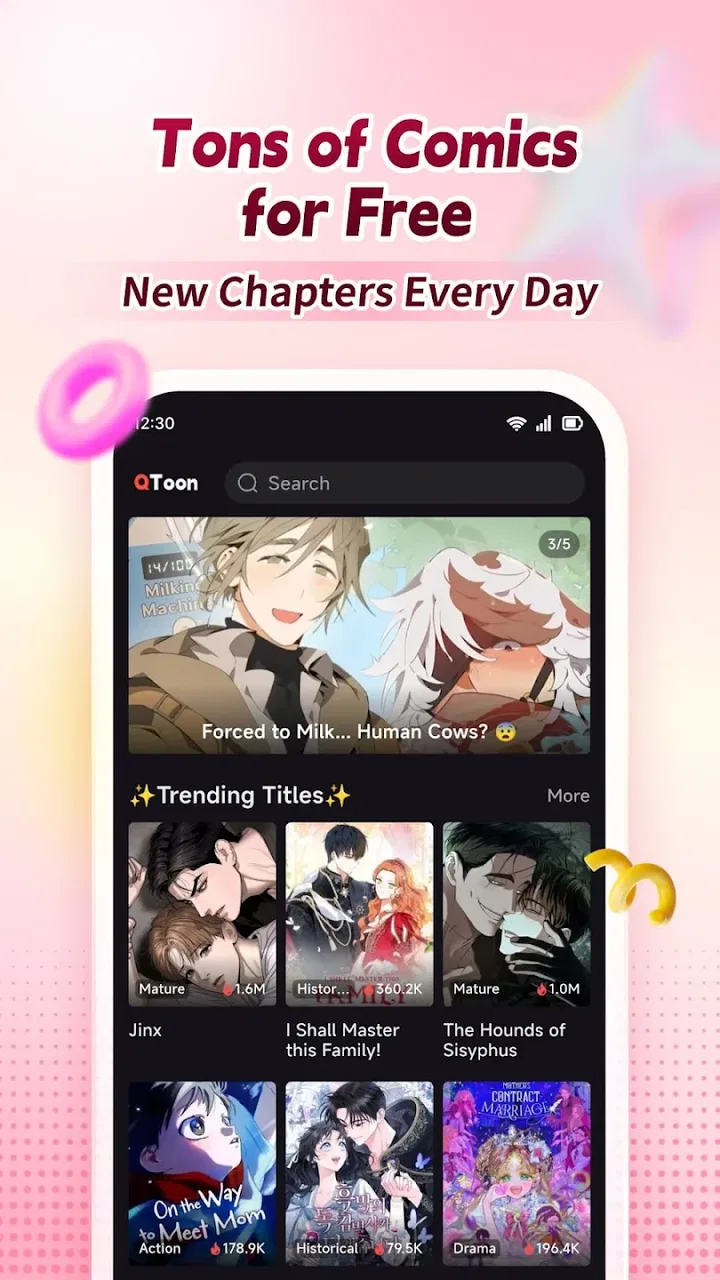
I tried QToon with a simple question in mind: would it make sense on a phone that more than one person in a household might use? Its purpose is clear from the start—it is a free comics and manga app from MD Apps Gateway—but the useful answer is less about the short description and more about how it fits into everyday reading. I found it most appealing as a lightweight place to browse and read, especially when I wanted something visual during a short break rather than a demanding entertainment setup.
That shared-device angle matters. A phone or tablet in a home is rarely treated like a completely private object all the time. Someone may hand it to a child for a quiet activity, leave it on a coffee table, or pass it to another reader after finishing a chapter. QToon feels best when each person understands that the app is a common reading shelf, not a carefully separated family library. Its biggest strength is easy access to comics; its biggest household limitation is the need for users to manage their own reading boundaries.
How QToon fits into shared reading at home
In a realistic evening scenario, I can imagine one person opening QToon while waiting for dinner, reading a few pages, and then leaving the device ready for somebody else. The app’s focus keeps that moment uncomplicated. There is no need to turn a casual reading session into a long planning exercise. For a household that already shares a device, that simplicity is valuable because the next reader can pick it up and continue exploring without needing a separate entertainment app.
You May Also Like

 Blood Strike: 2.5 Anniversary
Blood Strike’s Loadouts Turn Every Drop Into a Tactical Gamble
A close look at Blood Strike’s custom loadouts: how fast access to signature weapons reshapes its battle royale rhythm, rewards preparation, and narrows the gap between fights.

 Pandora - Music & Podcasts
Pandora’s Music Is Easy to Start, but Harder to Recover
Pandora’s strength is its low-effort path from a seed to a station. Its weak spot is how much confidence it asks you to place in connection, setup, and quiet recovery.

 8 Ball Pool
 Is Built on Rivalries, Rematches, and Routine
A close look at the rivalries, rematches, shared routines, and unanswered safety questions that turn a quick pool match into a persistent mobile community.

 Samsung Music
’s Quiet Strength Is Playing What You Already Own
Its reach comes less from spectacle than from dependable access to a personal library. That simplicity is both the app’s strongest retention engine and its ceiling.

 AccuWeather: Weather Radar
AccuWeather Review: A Quick, Clear Forecast for Everyday Decisions
For everyday plans, the best forecast is the one you can understand quickly. AccuWeather makes rain timing, radar, and local conditions easy to act on, with a few trade-offs.

 Hill Climb Racing
Why Hill Climb Racing Still Turns Crashes Into One More Run
A tiny car, a bumpy hill and one more upgrade: Hill Climb Racing keeps resurfacing because its simple chaos makes every near-miss feel personal.
More From Our News Desk



At the same time, shared use changes how I judge any comics reader. On a personal phone, I can tolerate a little confusion about what I last opened because the device belongs to me. On a family tablet, that confusion becomes more noticeable. A younger reader may not know which title another person was viewing, while an adult may prefer not to leave a personal reading trail visible to everyone. I would therefore treat QToon as a communal reading space unless every user has agreed on a simple routine for handing the device over.
That routine can be very low effort. Before passing the phone along, I would finish the current page, return to a neutral browsing position, and avoid leaving a chapter open if the next reader is likely to be much younger. This is not a special tool inside QToon; it is simply a sensible way to use a shared comics app. The practical insight is that the handoff matters almost as much as the reading experience when several people use one screen.
QToon is currently free, which removes one of the most awkward parts of household sharing: deciding whether a second person is allowed to use a paid subscription. That does not automatically solve every concern, but it makes casual trial easier. A parent can see whether a child enjoys reading comics on the device, and an adult can test the app without first committing money to a service that may not become part of the family’s routine.
Free access also changes the comparison with familiar alternatives. A dedicated comic store may be better for readers who want a carefully managed personal collection, purchases tied to an account, or a long-term archive. A general web browser may be more flexible for someone who already knows exactly where to find a title. QToon sits between those habits: it is more focused than opening random browser tabs, but less obviously suited to readers who want their library and identity separated with precision.
What I noticed during the first setup
The app is listed for Android devices running version 7.0 or later, so it is approachable even for people using an older phone or tablet rather than the newest hardware. That broad compatibility is useful in a household, because shared devices are often passed down. An older spare phone can become a reading screen without requiring the family to replace it immediately.
I would still begin setup with the device owner present. The important question is not whether installation is difficult; it is who will be using the app and what everyone expects to see there. If an adult and a child share the same screen, I would explain that the app is for reading and that titles should be chosen together at first. If two adults share it, I would agree on whether leaving a current chapter open is acceptable.
QToon is marked for Everyone, which makes it easier to consider for a broad household audience. I would not interpret that label as a replacement for parental judgement about individual comic titles. Age suitability can vary from one work to another, even when an app itself is presented for a general audience. A child who can comfortably use the interface may still need an adult to help decide what belongs in their reading time.
This is where I think some readers may expect more than the app itself promises. An Everyone rating does not mean that every possible story will match every family’s standards. I would preview unfamiliar material before handing over the device, particularly if the child is young or if the tablet is used during unsupervised quiet time. The useful boundary is between the app’s general age label and the content a household chooses to open inside it.
The current release is version 1.9.6. For me, that makes it worth checking the installed version before judging a problem as permanent. If the app behaves differently after an update, I would first confirm that the device is running the current release and then repeat the same reading task. This is a small but practical habit with any frequently updated reader: it prevents old impressions from becoming household rules.
Keeping accounts and reading habits separate
Shared-device readers often want a direct answer to an account question: can each person keep a separate identity? I would approach QToon cautiously here and avoid assuming that a common installation automatically creates personal boundaries. The safest everyday plan is to regard the app as shared unless the people using it can clearly see and manage separate spaces themselves.
That distinction affects privacy. If you are reading something you would rather keep personal, QToon is more comfortable on your own phone than on a family tablet. A shared device can expose the last open screen, browsing choices, or unfinished chapter simply because the next person sees the same display. That is not necessarily a flaw in the reading experience, but it is a real trade-off that should influence where you install it.
For two adults, a simple coordination method works well: each person can use a different time slot, remember the title they were reading, and close the app at the end. For children, I would add a verbal check-in rather than relying on memory. Asking what they want to read before handing over the device gives the adult a chance to guide the choice without turning the app into a complicated family-management project.
One non-obvious benefit of this approach is that it makes QToon useful as a conversation starter. Instead of silently handing over an open screen, a parent can ask the child to explain what they are looking for and why. That helps with reading confidence and content judgement. The app does not need a special educational mode for the household to get value from it; the shared-device routine can provide that context.
There is also a trade-off for couples or roommates. A common device makes it easy to recommend a comic by leaving it ready on the right page, but it can also create accidental spoilers. If someone is midway through a story, the next person may see a cover, chapter title, or page that gives away more than intended. I would use a neutral browsing position when recommending something and mention the title aloud instead of leaving a revealing page visible.
Reading comfort versus the usual alternatives
Compared with a browser, QToon gives the activity a more deliberate identity. I prefer opening a comics-focused app when I want to read rather than search, answer messages, and fight through unrelated tabs. That separation helps on a small screen, where browser clutter can make a visual story feel less comfortable. For a quick session, a dedicated reader is simply easier to approach.
Compared with a large commercial manga platform, the decision is more nuanced. A major service may be the better choice for someone who wants a strong account system, a known catalogue, purchase history, or carefully organized long-term reading. QToon appeals more to a reader who values a free starting point and does not need the app to become a formal archive. In a shared household, that lighter commitment can be an advantage.
I would not recommend it as the only option for a serious collector. If your priority is owning a meticulously ordered library, moving between several devices with a predictable personal profile, or building a reading history that belongs only to you, a dedicated paid platform may fit better. QToon makes more sense for discovery and casual reading than for treating comics like a permanent digital bookshelf.
Against a plain file viewer, the app’s category focus is the important difference. Opening comic files locally can be useful when you already have your own collection, but it puts more responsibility on the user to organize files and make them available. QToon is aimed at the opposite moment: you want an app built around finding and reading comics or manga rather than managing a folder.
My practical tip is to choose the alternative based on the household’s reading pattern. If everyone reads occasionally and shares one screen, QToon’s free, focused approach is attractive. If each person reads daily and expects a private, synchronized collection, separate accounts or a more established personal library service will probably reduce friction. The app is not competing equally well in both situations.
Age, trust, and sensible supervision
The Everyone content rating is reassuring as a starting point, especially when introducing the app to a mixed-age household. I still prefer active supervision for a first session. I would sit with a child, browse together, and establish a simple rule: if a title feels confusing or uncomfortable, stop and ask. That rule is more useful than assuming an age label can make every individual reading choice for you.
For older children, the best arrangement may be guided independence. Let them choose from material an adult has already seen, then allow them to read without constant interruption. This keeps the app enjoyable while preserving trust. It also avoids a common mistake with shared technology: monitoring so intensely that the child stops treating reading as a relaxed activity.
Adults should also remember that “Everyone” describes the app’s general suitability, not a promise that every page will suit every reader. I would apply the same common sense to QToon that I use with a public library shelf: the broad audience is welcome, but individual selections still deserve attention. That is particularly important when a device moves between a preschooler, a teenager, and an adult in the same afternoon.
Another useful boundary is time rather than content. Comics can turn a short break into a much longer session because each page encourages one more. On a shared tablet, I would agree on a handoff time before opening the app. A timer outside the reading experience may be enough. This keeps one person from unintentionally occupying the household device and makes sharing feel fair without blaming the app for being engaging.
What the rating and adoption suggest
QToon has an average rating of 4.8 from around 26 thousand ratings, with roughly 198 written reviews. Those figures suggest that the app has made a strong impression on many people, while the written comments may help prospective users understand what kinds of reading habits it suits. I see that response as encouraging, but I would still judge the app against your own household needs rather than treating a high average as a guarantee.
It has passed 500 thousand installs, which gives it a meaningful audience for a relatively recent comics app. The release date is July 8, 2025, so I would keep the context in mind when comparing it with services that have had many more years to build mature libraries and routines. A newer app can feel refreshingly direct, but it may also require users to be more flexible as the experience develops.
Those adoption figures are useful in one specific way: they make QToon feel less like an obscure experiment that only one person in the household will understand. If you recommend it to a friend or relative, there is a reasonable chance they will recognize the name or at least understand its purpose quickly. That social familiarity can make sharing recommendations easier, even though it does not replace checking whether the available reading selection suits you.
The developer is MD Apps Gateway, and the app’s current version is 1.9.6. I would mention both when helping another household member install it, especially if they are using an older Android device. Matching the app name, developer, and version context reduces the chance of selecting a similarly named reader or troubleshooting the wrong installation.
Small habits that make the app work better in a home
My first recommendation is to create a handoff ritual: finish the page, return to a neutral screen, and tell the next reader whether you found anything worth trying. This prevents accidental spoilers and makes the device feel shared rather than abandoned. It takes seconds, but it solves a problem that many people only notice after someone opens an unexpected page.
My second recommendation is to separate discovery from approval when children are involved. Let an adult browse unfamiliar material first, then offer a short selection for the child to choose from. This gives the child real control while keeping the adult involved in age-appropriate decisions. It is more balanced than either unrestricted browsing or removing all choice.
My third recommendation is to use QToon for short, defined sessions if the device is in high demand. A chapter or time limit agreed in advance works better than asking someone to stop only after another person needs the tablet. The app is particularly suitable for this because comics naturally divide reading into visible progress points, even if the household manages the schedule outside the app.
Finally, I would keep personal reading on a personal device when privacy matters. QToon’s free access makes it easy to install in both places, so there is no reason to force every reading habit onto the shared screen. Use the household tablet for recommendations and casual sessions; use your own phone for stories you want to keep separate. That division is clearer than expecting one installation to serve every purpose.
My household verdict
I recommend QToon to households that want a straightforward, free way to bring comics and manga into shared downtime. It is a good fit for a spare Android phone, a family tablet used in turns, or an adult who wants to introduce a child to comics while staying involved in the selection. The Everyone rating and broad Android compatibility make the first step approachable, and the strong user response gives the app a credible starting point.
I would skip it as the main choice if your household needs firm personal account boundaries, a carefully maintained private collection, or a service designed around long-term ownership and synchronization. In those cases, a more established comic platform may be worth paying for because it reduces the coordination work that QToon leaves to the users.
My final view is that QToon works best when expectations stay realistic. It is not something I would install and then forget about the way I might treat a private single-user reader. On a shared device, I would pair it with clear handoffs, adult guidance for younger readers, and a little respect for each person’s reading space. Used that way, it becomes an easy household doorway into comics rather than another source of confusion over whose chapter is open.
FAQs for QToon
01What is QToon about?
QToon is a dynamic platform designed for comic enthusiasts. It offers a wide range of webtoons and graphic novels across various genres, including action, romance, and fantasy. With regular updates and a vibrant community, users can immerse themselves in captivating stories and interact with their favorite creators.
02Is QToon free to use?
Yes, QToon can be downloaded for free on both Android and iOS devices. While it offers free access to a substantial selection of comics, certain premium content may require in-app purchases. Users can enjoy a vast collection without spending, but unlocking exclusive features might involve additional costs.
03How does QToon support creators?
QToon provides a platform for creators to showcase their talents and reach a global audience. Through in-app purchases and a tipping system, fans can directly support their favorite artists. This not only encourages creators to produce more content but also fosters a sustainable ecosystem for creative growth.
04Can I download comics for offline reading?
Yes, QToon allows users to download their favorite comics for offline reading. This feature is particularly useful for users who want to enjoy their comics on the go without needing a constant internet connection. However, some content might require an active subscription or purchase for offline access.
05Is there a community aspect to QToon?
Absolutely! QToon boasts an engaging community where users can comment on episodes, share their thoughts, and interact with other fans. This interactive environment enhances the reading experience, allowing users to connect over shared interests and discover new comics based on recommendations from fellow enthusiasts.
Pros
- User-friendly interface for easy navigation.
- Wide range of comic genres available.
- Offline reading mode for convenience.
- Regular updates with new content.
- Customizable reading settings.
Cons
- Limited free content available.
- Ads can be intrusive at times.
- Requires a stable internet connection.
- No option for content translation.
- In-app purchases can be pricey.

QToon
Gallery